
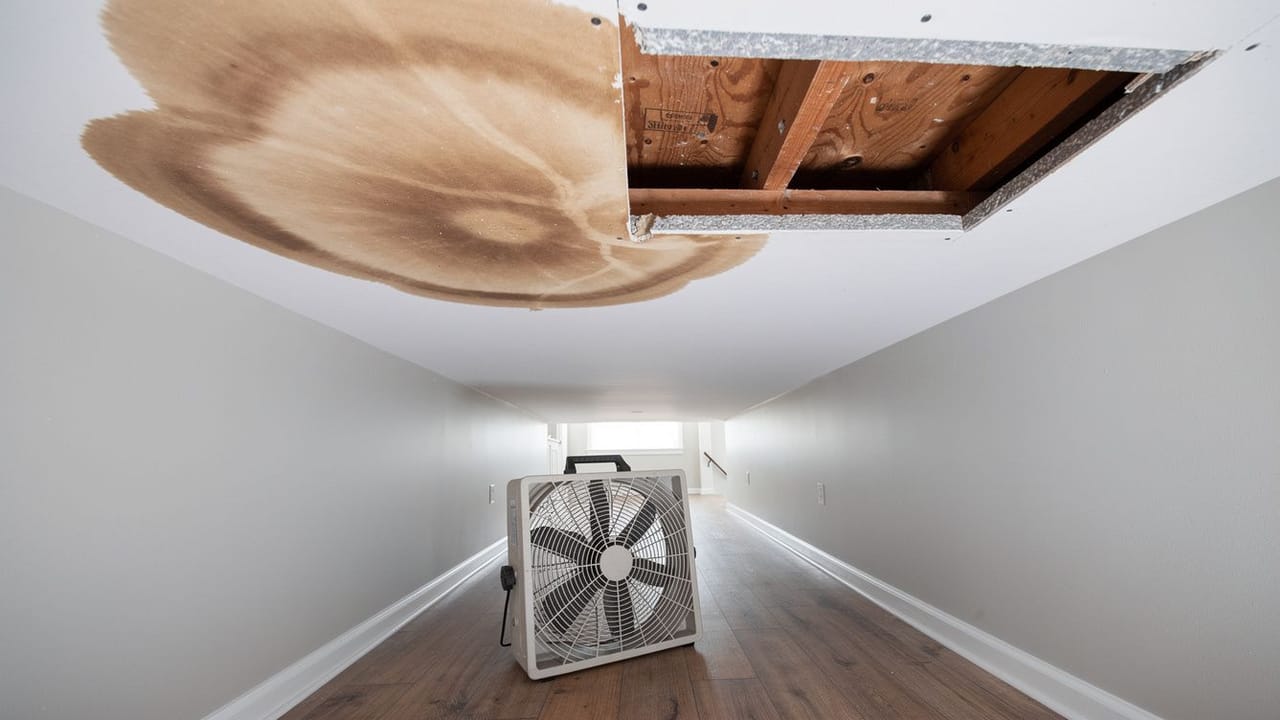
· by Michael Blair, Nashville's Drywall Repair
Drywall that has been wet is not automatically ruined, but it gets very little time. According to EPA’s mold remediation guide, chapter 4, wallboard may be dried in place if there is no obvious swelling and the seams are intact, and if not, it should be removed, discarded and replaced. EPA’s brief guide to mold, moisture and your home puts the window for drying water-damaged materials at 24 to 48 hours to prevent mold. The air here is rarely dry, either: NOAA’s relative humidity tables put Nashville’s yearly average at 84 percent at 6 a.m., and 89 percent on an August morning. Painting over the evidence does neither the leak nor the board any good.
Fix the leak first
Obvious and routinely skipped. A ceiling stain repaired without finding the source tends to come back, and by then the surrounding board has been wet for longer. EPA’s remediation guide, chapter 2 says to fix the source of a moisture problem as soon as possible and to clean and dry wet or damp spots within 48 hours.
Water can run some distance before it shows, so the stain may not sit directly below where it got in. Before we cut anything, we look above it, in the attic or under the bathroom upstairs, and that search is where every water-damaged drywall job of ours starts.
What drywall has to come out after a leak?
Any board that is swollen, soft, crumbling or visibly moldy. EPA’s chapter 3 adds that porous materials that are wet and have mold growing on them may have to be discarded. We cut back past the stain to dry, sound board, then check the back of the piece we pulled and the inside of the cavity, because the brief guide names the back side of drywall as one of the places mold hides. When the cut lands close to a stud, we usually carry it to the stud’s center so the new piece has something to screw to. That is about fastening, and it has nothing to do with how far the water went.
Wet insulation in the cavity comes out too, whatever the surface looks like: in the same chapter 4 table, EPA’s entry for both fiberglass and cellulose insulation is discard and replace. Those tables are written for clean water, and chapter 5 says so plainly, so a backed-up drain or an overflowed toilet falls outside them and we treat it more cautiously. Material that has been wet for more than 48 hours, or already shows mold, goes by EPA’s second table, the one written for mold cleanup.
- Find and fix the source before repairing
- Cut back past the stain to dry, sound board
- Remove wet insulation from the cavity
- Dry the cavity fully before closing it
- Stain-blocking primer, not ordinary primer
When can a wet wall be closed again?
Framing and cavity have to be dry before new board goes on. The brief guide’s instruction is to dry all items completely, and EPA’s chapter 3 notes that moisture meters may be helpful for measuring the moisture content of building materials and for following the drying. We take readings on the studs, the plate and the old board around the opening, and the wall stays open until they come down, however long that takes. For a bathroom or a basement, our post on drywall for humid rooms covers which board goes back in.
Closing a damp cavity sets up exactly the mold problem the repair was supposed to prevent. EPA’s chapter 3 makes a related point: moisture should not be trapped between two vapor barriers, or mold may result.
Why does a water stain need special primer?
Water stains can bleed through ordinary paint. Zinsser’s technical data sheet for B-I-N, a shellac-base primer, says one coat blocks stains, water stains included, so they will not bleed into the topcoat, and that some stains need a second coat. We seal the marked area with a shellac-base stain blocker before any paint goes on.
This applies even where the board is sound and only the surface is marked. The same sheet says the surface should be clean, dry and sound before priming, so the order on a stained ceiling is the leak fixed, the board dry, then the primer. Our ceiling repair page shows the rest of that work, and if you have a stain that keeps returning, ask us for a free estimate.
Sources
- US EPA, Mold Remediation in Schools and Commercial Buildings Guide, Chapter 4 (Table 1) — Wallboard may be dried in place with no obvious swelling and seams intact, otherwise remove, discard and replace; wet fiberglass and cellulose insulation discard and replace; over 48 hours or visible mold, consult Table 2
- US EPA, A Brief Guide to Mold, Moisture, and Your Home — Dry water-damaged areas and items within 24-48 hours to prevent mold; dry all items completely; mold may hide on the back side of drywall
- NOAA National Centers for Environmental Information, Average Relative Humidity: Morning and Afternoon (data through 2023) — Nashville annual mean relative humidity 84% at 6 a.m. and 56% at noon; August morning 89%
- US EPA, Mold Remediation in Schools and Commercial Buildings Guide, Chapter 2 — Fix the source of the moisture problem as soon as possible; clean and dry wet or damp spots within 48 hours
- US EPA, Mold Remediation in Schools and Commercial Buildings Guide, Chapter 3 — Wet porous materials with mold may have to be discarded; moisture meters may be helpful for measuring moisture in building materials; moisture trapped between two vapor barriers may cause mold
- US EPA, Mold Remediation in Schools and Commercial Buildings Guide, Chapter 5 — The guidelines are for damage caused by clean water
- Rust-Oleum/Zinsser, B-I-N Shellac-Base Primer Technical Data (BIN-03, Rev. 050523) — One coat blocks water and other stains from bleeding into the topcoat, some stains need a second coat; surfaces should be clean, dry and sound
FAQ
Repairing Drywall After a Leak — questions
Can water damaged drywall be dried out rather than replaced?
Sometimes. EPA guidance says wallboard may be dried in place if there is no obvious swelling and the seams are intact, and that guidance covers clean water and materials wet for less than 48 hours with no visible mold. Board that is soft, sagging, crumbling or moldy should be removed and replaced. Whatever the weather, start drying right away, because EPA puts the window for drying to prevent mold at 24 to 48 hours.
Why does my ceiling stain keep coming back after painting?
Two likely reasons are a leak that has not actually been fixed and a stain painted over without a stain-blocking primer. Water stains can bleed through ordinary paint, and Zinsser says one coat of its shellac-base B-I-N primer blocks water stains from bleeding into the topcoat, with some stains needing a second coat. The leak has to be resolved first regardless.
How far back should I cut damaged drywall?
Past the stain to board that is dry and firm, then check the back of the removed piece and the cavity for mold, since EPA lists the back side of drywall among the places mold hides. We often extend the cut to the center of the nearest stud so the patch has something to fasten to. Take out any wet insulation, and confirm the framing is dry with a meter before closing the wall.
How long can drywall stay wet before mold grows?
Not long. EPA puts the window for drying water-damaged materials at 24 to 48 hours to prevent mold, and Nashville’s air does not help, averaging 84 percent relative humidity at 6 a.m. in NOAA’s tables. Board wet longer than 48 hours, or already moldy, falls under EPA’s mold cleanup table rather than simple drying.