
· by Michael Blair, Nashville's Drywall Repair
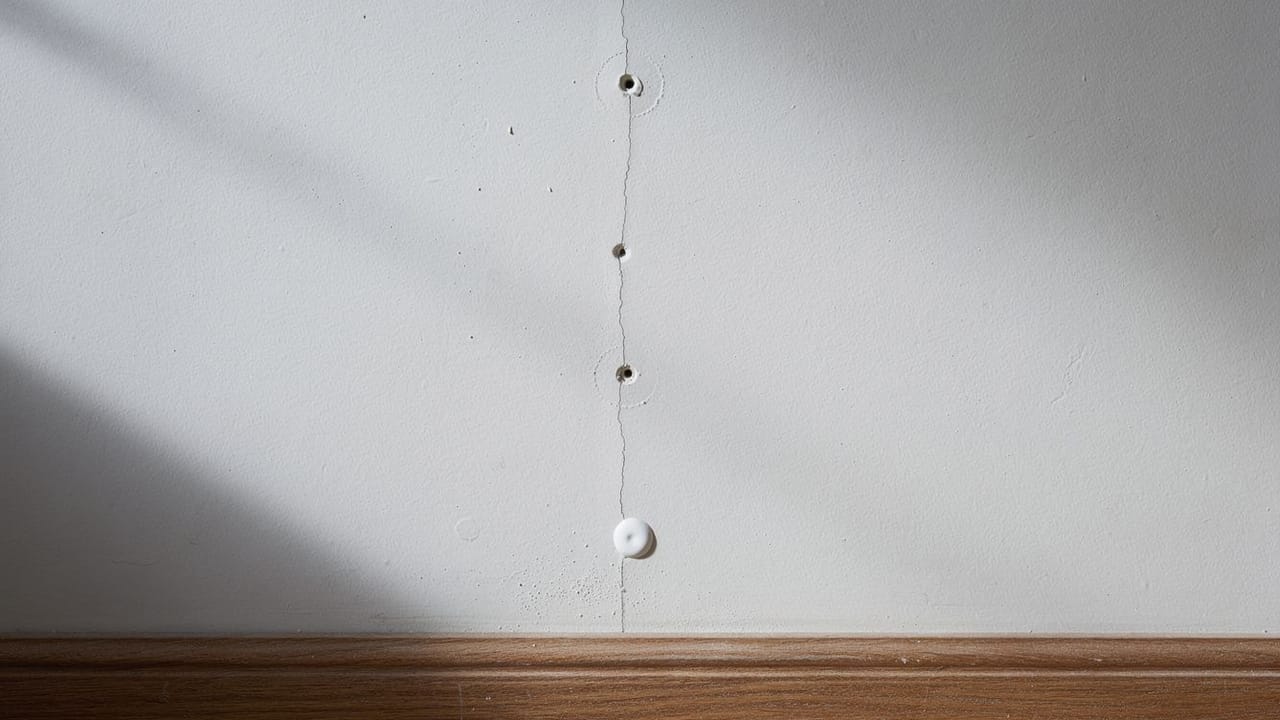
Round bumps along a stud line and hairline cracks along a taped seam both show up at the weak points of a drywall job. According to the CGC Gypsum Construction Handbook’s chapter on problems and remedies, unsatisfactory results almost always appear first over joints or fastener heads. A pop comes from the framing shrinking behind the board. A seam crack can come from movement too, or from how the tape went on and how fast the compound dried.
Why do nail pops happen?
Framing lumber dries and shrinks after it is installed. The Canada Mortgage and Housing Corporation’s builders’ guide to drywall application explains that as the lumber dries, the stud pulls away from the gypsum board, and any later movement of the board makes the nail pop. Once the board is loose on the fastener, pressure on the wall pushes the head out through its thin covering of compound. Drying is not the end of it, either: the USDA Forest Products Laboratory’s Wood Handbook says wood in service takes on and gives up moisture with seasonal and daily changes in the air around it, and it swells and shrinks as it does.
The timing follows the furnace. The CGC handbook says pops that appear after a month or more of heating are usually caused wholly or partly by wood shrinkage, so they turn up most in the first heating seasons of a new house, once winter heat starts drying out the framing.
How do you fix a nail pop properly?
We drive a drywall screw into the same stud about an inch and a half from the pop, pressing the board against the framing as it goes in, then tap the old nail just below the surface, scrape off the loose compound, and fill and feather. That is the repair the CGC handbook calls the more permanent method, down to the 1-1/2 inch spacing. The CMHC guide adds that screws resist popping better than nails and that longer fasteners make pops worse, which is why the new fastener is a screw and not a bigger nail.
A pop that is only filled can come back, because the board is still loose on a stud that has moved away from it. Not every bump needs the work: the handbook puts the threshold at pops standing 0.005 inch or more proud of the board. If pops show up partway through winter, its advice is to leave them until near the end of the heating season, while the wood is still shrinking. Re-setting pops is part of our drywall repair and patching work, and we prime each one before the paint goes back on.
- Re-fasten with a screw about 1-1/2 inches from the pop before filling
- Set the original nail just below the surface
- Feather each coat of compound out wider than the one before
- Prime the repair before painting
- Expect more of them where the framing went up wet or the board was loosely fastened
Seam cracks
A hairline crack along a taped seam has more than one possible cause. The CGC handbook lists structural movement, expansion and contraction from humidity and heat, and joint compound that dried too fast; it traces cracks along the edge of the tape to rooms that were hot, dry or drafty while the compound cured, and to too much compound bedded under the tape. When movement is the cause, filling the crack on its own may not hold, because the joint is still moving.
For a seam that keeps reopening, we cut away the tape that has let go, re-tape the joint, and feather the compound over a broad area, which is the handbook’s remedy. The tape we choose matters. USG’s white paper on matching joint compound with the proper joint tape calls paper tape the best choice for strong, crack-resistant joints with every compound, says fiberglass mesh must be used with a setting-type compound, and warns that mesh allows visible cracking at lower loads. On a seam that has already cracked once, we use paper.
When it is more than movement
Diagonal cracks running from the corners of doors and windows sit at known weak points. The CGC handbook describes this field cracking as starting at the corner of a partition, a door or a light fixture, caused by the same movement as the rest, and the CMHC guide names racking, differential settlement and shrinkage of major framing members as large-scale movement that shows at wall and ceiling intersections. That guide also suggests extra tape laid diagonally to reinforce the corners of openings. A ceiling-line crack that comes back every winter at the top of an interior wall, then closes up by summer, is a separate case, covered in our post on truss uplift.
When a crack keeps getting wider, or shows up along with a door that has started to stick, we look at what is moving before we patch anything. The handbook’s remedy for stress cracks starts with relieving the stress and correcting the conditions behind it, and a surface repair laid over a cause that is still at work can end up being done twice. If you are not sure which kind you have, ask us for a free estimate.
Sources
- CGC (USG Canada), Gypsum Construction Handbook, ch. 12, Problems, Remedies and Preventive Measures — Problems show first over joints and fasteners; pops from shrinkage after a month of heating; screw about 1-1/2 in. from the pop; repair only pops 0.005 in. proud; wait until near the end of the heating season; seam crack causes; cut away loose tape, retape and feather; field cracking from corners of doors
- USG, Matching Joint Compound with the Proper Joint Tape (J2140) — Paper tape the best choice for crack-resistant joints; fiberglass mesh only with setting-type compound and cracks at lower loads
- Canada Mortgage and Housing Corporation, Drywall Application (MH 90D61) — Stud pulls away from the board as lumber dries, then the nail pops; screws resist popping better and longer fasteners worsen it; large-scale movement at intersections; diagonal tape at openings
- USDA Forest Products Laboratory, Wood Handbook (FPL-GTR-282), ch. 4, Moisture Relations and Physical Properties of Wood — Wood in service gains and loses moisture with seasonal and daily changes in the air and swells and shrinks with it
FAQ
Nail Pops and Cracked Seams Explained — questions
Are nail pops a structural problem?
Not on their own. A pop is a fastening and finishing problem, and the CGC handbook traces pops to improper application, shrinkage of the framing lumber, or both. Cracks that keep widening, or that arrive along with doors starting to stick, are the reason to look further at what is moving behind the wall.
Why does my drywall crack keep coming back?
Usually because whatever caused it is still at work. A seam crack can come from movement, from compound that dried too fast, or from weak tape work, and fresh compound over the old crack does not add the reinforcement that tape gives the joint. USG recommends paper tape as the best choice for crack-resistant joints. The lasting repair cuts away the loose tape, re-tapes the seam and feathers the compound out wide.
Do I need to re-fasten a nail pop or just fill it?
Re-fasten. A screw driven about an inch and a half from the pop, with the board held against the stud, pulls it tight; after that the old nail is set just below the surface and the spot is filled and primed. A pop that is only filled can return because the board is still loose. If it appeared in the middle of winter, waiting until near the end of the heating season gives the framing time to finish shrinking.
Can you use nails to hang drywall?
Plenty of walls were hung with nails, and that is where many pops start once the framing shrinks. The CMHC builders’ guide says screws resist popping better than nails and that longer fasteners make pops worse, so when we re-fasten a popped spot the new fastener is a drywall screw, not a bigger nail.