· by Michael Blair, Nashville's Drywall Repair
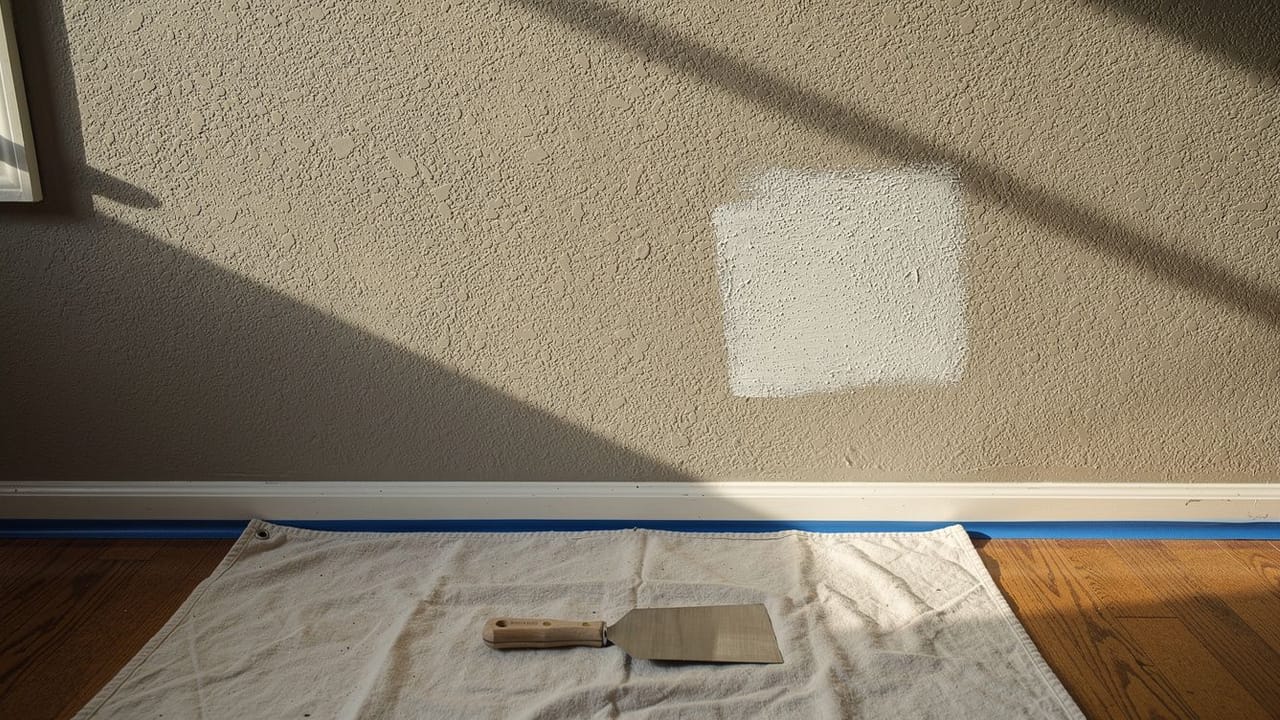
Many of the walls we patch around Nashville carry a sprayed texture, and matching it is the step that decides whether a repair disappears. A flawless flat patch on a textured wall still reads as a patch. Texture works in your favor once it is matched: the Gypsum Association’s GA-214 guide to levels of gypsum board finish notes that textures hide minor imperfections. That is why texture is the last step of most of the drywall repairs we do, and the whole job of our texture matching service.
Which wall texture do you have?
USG’s page for its wall and ceiling spray textures names the common sprayed patterns as spatter, spatter/knockdown and orange peel, running from a bold knockdown to a light orange peel. Orange peel is the light, even spray. Knockdown is spattered on heavier and then flattened by hand with a knife. GA-214 lists brush, roller, spray and trowel as the ways texture goes on, and the hand-troweled patterns, skip trowel among them, we match with a blade instead of a sprayer.
We look at the wall in raking light before starting, with a work light held low and off to one side, because the pattern is easier to see than to remember. GA-214 explains why that works: light striking a surface obliquely, at a very slight angle, greatly exaggerates its irregularities.
The same guide names the spots where light is hardest on a wall, among them walls beside windows and skylights, long hallways, and large rooms flooded with daylight or lamps. A patch in one of those places gets more care than one behind a door.
Matching orange peel
For a small orange peel patch we test the spray on a piece of cardboard before it goes anywhere near the wall, adjusting distance and pressure until the droplet size matches what is already there. Then it goes on in light passes rather than one heavy coat.
We build it up gradually, since too much is far harder to correct than too little. A matched patch is not finished when it dries, either: USG’s ready-mixed spray texture is described on its own product page as not washable until it has been painted over.
- Identify the texture in raking light first
- Always test on cardboard before touching the wall
- Build up in light passes rather than one heavy coat
- Knockdown needs flattening at the right moment
- Prime before painting, always
How is knockdown texture matched?
We spray heavier than for orange peel, let the spatter begin to firm up, and then flatten it with a wide knife and light pressure. The cue we go by is the wet shine going off the surface.
The timing is the hard part. Flatten it too early and it smears; leave it too long and it won’t flatten, and practice on cardboard is the only way we know to learn the window. USG sells its spray textures partly on their open time for hand-tooled knockdown finishes, which tells you how much that window matters to the people doing it.
Does a texture patch need primer?
GA-214 recommends coating the prepared surface with a drywall primer before the final finish, and we prime every textured repair before paint touches it. USG’s submittal for its First Coat primer explains what goes wrong without it: problems known as “joint banding” or “photographing” come from differences in porosity and surface texture between the paper face and the finished compound, and gloss paints magnify them. A repair puts fresh compound and texture next to a wall that has held paint for years, and we treat it the same way. The submittal also says the priming directions on the texture bag still apply.
On a wall with any sheen, we plan to paint corner to corner rather than spot-touch. GA-214 says paints with sheen levels other than flat highlight surface defects, and in our experience the edge of a touched-up area shows under sheen even when the color is right. How smooth the wall under that paint needs to be follows its own scale, which our post on drywall finish levels walks through. If a patch on your textured wall never quite disappeared, ask us for a free estimate and we will look at it in the same raking light.
Sources
- Gypsum Association, GA-214-10 Recommended Levels of Finish for Gypsum Board (2010) — Textures hide minor imperfections; texture applied by brush, roller, spray or trowel; oblique light exaggerates irregularities; critical lighting areas; drywall primer before final finishes; sheen other than flat highlights surface defects
- USG, Sheetrock Brand Wall and Ceiling Spray Textures — Spatter, spatter/knockdown and orange peel patterns; open time for hand-tooled knockdown finishes
- USG, Sheetrock Brand Spray Texture — Not washable unpainted; overpaint when dry
- USG, Sheetrock Brand First Coat Primer submittal (J1095) — Banding and photographing caused by porosity and texture differences between face paper and compound, magnified by gloss paints; texture bag priming directions still apply
FAQ
Matching Wall Texture on a Repair — questions
How do I match orange peel texture?
We test the spray on a piece of cardboard first, adjusting the nozzle and the distance until the droplet size matches the wall, and then apply it in light passes. Building up gradually is easier than taking off texture that went on too heavily. Once it is dry, the patch is primed and painted with the rest of the wall.
What makes knockdown texture hard to match?
The timing. It is sprayed heavier than orange peel and then flattened with a wide knife while it is still workable. Too early and it smears, too late and it will not flatten. We go by the wet shine leaving the surface, and practice on cardboard is how that window is learned.
Do I have to repaint the whole wall after a patch?
It depends on the sheen. The Gypsum Association’s finish guide says paints with sheen levels other than flat highlight surface defects, so flat paint is the most forgiving, and a primed patch on a flat wall can sometimes be touched up without showing. On eggshell and anything glossier we plan to paint the wall corner to corner, because that is the reliable way to keep the patch from showing.
Why are walls textured?
Partly because texture hides small flaws; the Gypsum Association’s GA-214 guide notes that textures hide minor imperfections. On a repair that works in our favor once the pattern is matched, since a flat patch on a textured wall still reads as a patch however clean it is. Orange peel, knockdown and skip trowel are the patterns we see most.